


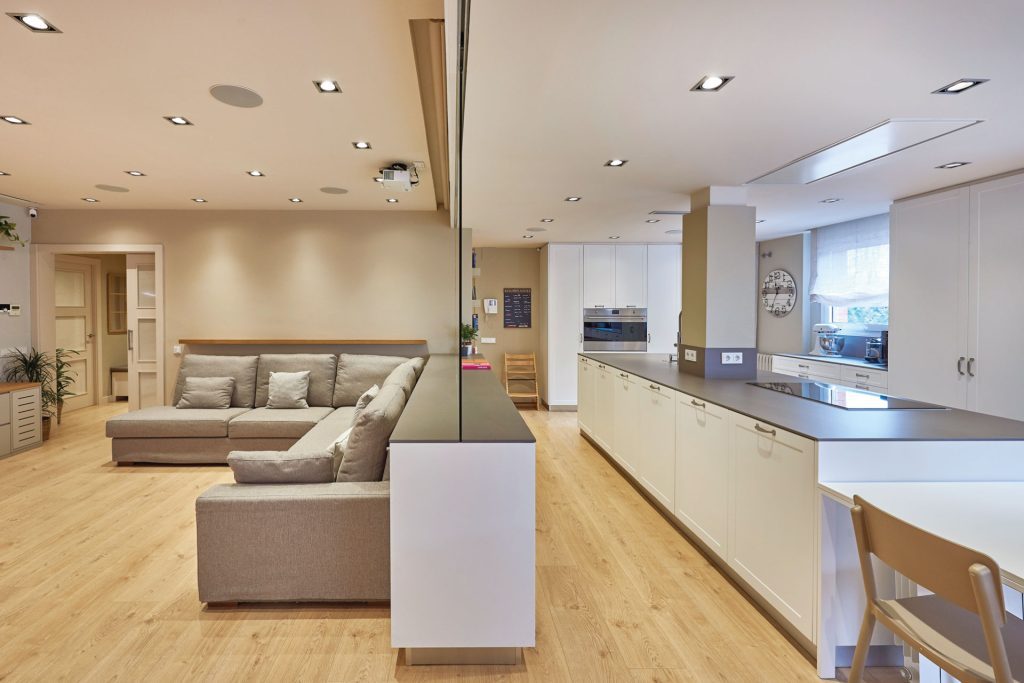


With the arrival of spring and summer, many households take advantage to start a new stage marked by renovations and improvements in the home. The increase in daylight hours, pleasant temperatures, and the proximity of vacations make this time of year one of the most common for renovating spaces in the home, especially the kitchen, which in recent years has gained increasingly importance.
Far from being just a functional space, the kitchen has transformed into a central place within the home. Currently, it is not only used for cooking, but also for spending time with family, receiving visitors, teleworking, or enjoying moments of disconnection. In addition, current trends favor open kitchens integrated with other rooms, such as the living room.
Before deciding on aspects such as materials, layout, or colors, the Kitchen Furniture Association (AMC), promoter of the initiative “The Good Kitchen Made at Home,” insists on the importance of good advance planning.
For this, they recommend analyzing how the current kitchen is and what needs to be met with the reform. Aspects such as the daily use of the space, the need for storage, lighting, workspace, or circulation within the room are key to designing a practical kitchen adapted to each home.
The association also emphasizes the importance of having the advice of specialized professionals, as this allows creating more functional, comfortable, and durable spaces, tailored to both family routines and new ways of living in the home. Based on this planning, trends can serve as inspiration to achieve a modern kitchen aligned with current needs.
1. Turn the kitchen into a more social space


One of the main decisions in a renovation is to define the relationship of the kitchen with the rest of the home. In 2026, the continuity between kitchen, living room, and dining room will continue to gain prominence, whether through open spaces or semi-open solutions that allow connecting environments without losing a certain independence.
Opening the kitchen can help gain light, space, and conversation, but it must always respond to the real use of each home. For those who cook a lot, it will be essential to plan well the extraction, ventilation, and work areas. For those looking for a kitchen more integrated into family or social life, islands and peninsulas can provide additional surface, support area, and a meeting point within the home.
2. Choose durable, long-lasting, and easy-to-maintain materials


In a kitchen renovation, materials should not be chosen only for aesthetics. Countertops, fronts, floors, coverings, and furniture should respond to daily use, contact with food, humidity, heat, frequent cleaning, and the passage of time.
For this reason, AMC recommends opting for quality, resistant, safe, easy-to-clean materials suitable for each area of the kitchen. The current variety allows finding very different solutions in finishes, textures, and features, from technical surfaces to natural materials or proposals with a lower environmental impact, always prioritizing durability.
3. Plan lighting and ventilation well


Lighting is one of the great differences between a simply renovated kitchen and a truly comfortable kitchen. Gone are the days when the entire room was lit by a single ceiling light. Today, a good renovation should consider different levels of lighting according to the use of each area.
The general light should be uniform and pleasant. The functional light should reinforce the countertop, sink, and cooking area. The ambient light can help integrate the kitchen with the living room or dining room when it is part of an open space.
Ventilation should also be planned from the beginning. In open or semi-open kitchens, having good extraction and proper air circulation is key to maintaining comfort, preventing odors, and ensuring that the kitchen functions well on a day-to-day basis.
4. Integrate invisible technology and smart storage


Technology is becoming more present in the kitchen, but it is doing so in a more discreet way. Integrated appliances, less visible hoods, adjustable lighting, connected systems, or solutions that facilitate daily use improve comfort without visually overloading the space.
Storage should also be considered an essential part of the renovation. Drawers with full extraction, pantry columns, tall units, compartmentalized interiors, and solutions to make the most of corners help optimize space, improve ergonomics, and make everything more accessible.
It is not just about storing more, but about storing better. A well-organized kitchen avoids unnecessary trips, reduces clutter, facilitates cleaning, and makes daily use much more comfortable.
5. Choose colors and finishes that harmonize with the home


Once the layout, materials, and functional needs are defined, it’s time to think about aesthetics. Colors and finishes are also part of the renovation, but they should be chosen with a global vision of the home.
The kitchen in 2026 leans towards warm and natural color palettes, with off-whites, beiges, sands, soft grays, light woods, and small accents in greens, olive tones, or earth tones. These finishes help create bright, cozy, and easy-to-integrate spaces with the living room, dining room, or even transit areas.
In addition to the furniture, a renovation should consider walls, floors, coverings, decorative lighting, and small details that help the kitchen not seem like an isolated room, but rather a part of the home.
Renovating with a focus on how it is lived, not just how it looks
Beyond trends, AMC reminds us that a good renovation always starts with a simple question. How is the kitchen really lived in? A family with children does not cook the same as a couple who frequently entertains guests, a person who telecommutes from home, or someone who only cooks heavily on weekends.
Therefore, before choosing colors, materials, or layout, it is essential to analyze habits, routines, present and future needs, installations, paths, outlets, storage, ergonomics, lighting, and ventilation.
“Our goal as an association is to help the user approach the renovation with more information, more criteria, and more peace of mind. A kitchen is a long-term investment, so it is essential to rely on specialized professionals, be well informed about the available options, and opt for quality materials and solutions, also locally sourced, that inspire confidence from the outset,” conclude from AMC.
In short, this spring/summer renovations are looking towards more open, functional, resistant, and cozy kitchens. Kitchens that incorporate trends without losing sight of the essential, planning well to live better.