
Interior design is a field that is constantly seeking new solutions that are able to combine aesthetics, functionality, and customization. In this context, solid surface has become one of the most interesting materials for creating furniture, coverings, and all kinds of decorative elements capable of adapting to all kinds of projects.
Solid surface carpentry opens the door to completely customized designs, such as countertops, sinks, shelves, or other types of furniture. Thanks to its ease of work, it can be cut, joined, sanded, and molded to achieve continuous shapes, curved surfaces, and finishes practically without visible joints.
What is solid surface?
Solid surface is a composite material manufactured from natural minerals and acrylic resins, a combination that results in a solid, homogeneous, and easy-to-transform surface.
One of its main characteristics is that it maintains the same appearance throughout its thickness. This means that it can be cut, sanded, or repaired without losing its original finish. Unlike other materials coated with a surface layer, small scratches or signs of wear can be removed through a new polish.
Additionally, it is available in numerous colors and finishes. There are options of neutral tones, designs that imitate stone, translucent surfaces, and more striking proposals for projects in which the decorative element must become the focal point.
A material designed for custom projects
One of the reasons why solid surface has gained presence in interior design is its tremendous adaptability. The material can be used to create all kinds of pieces, whether they are curved, straight-lined, or with specific details, which gives a lot of flexibility when designing various products.
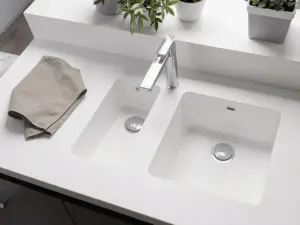
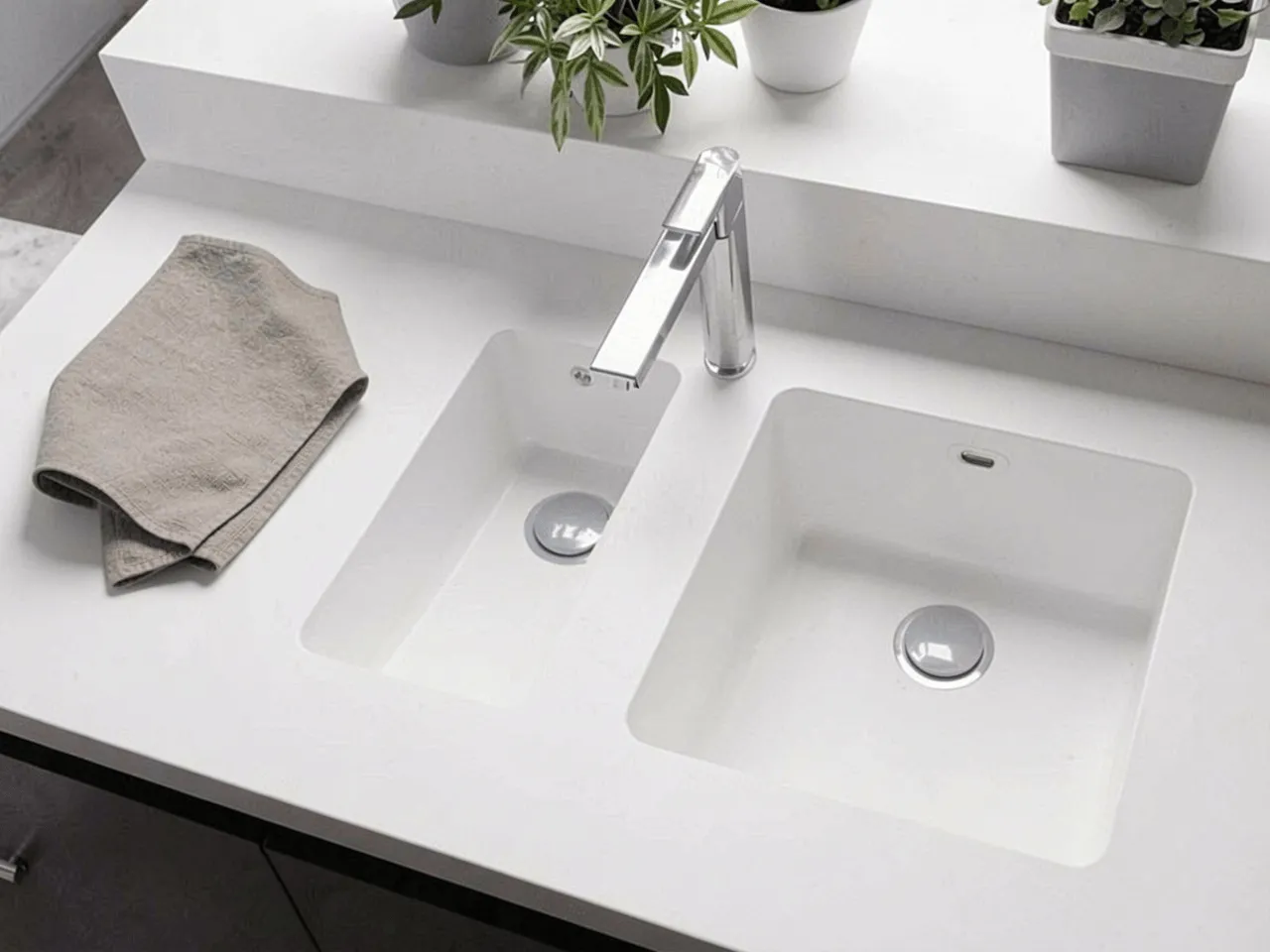
For example, it is possible to design a countertop that extends to form an integrated sink, manufacture a counter with rounded corners, or cover a wall with panels that appear as a single continuous surface. Joints can be worked in a way that they are barely visible, providing a clean and minimalist look.
The possibilities of solid surface machining
Solid surface machining allows for a high level of precision in the manufacture of decorative and functional pieces. Using specialized machinery, cuts, hollows, perforations, grooves, reliefs, and complex shapes can be made from a digital design.
This technique makes it possible to repeat patterns with great accuracy or create pieces that must fit together. It also facilitates the creation of decorative panels, logos, dimensional letters, lattices, and customized coverings.
Machining not only serves an aesthetic function. It can also be used to incorporate technical elements, such as spaces for lighting, electrical outlets, faucets, fastening systems, or integrated accessories.
Once the pieces are machined, they can be assembled and sanded to achieve a uniform surface. The final result is an element manufactured specifically for the project.
Curves and shapes difficult to achieve with other materials
Another outstanding characteristic of solid surface is its ability to adopt curved shapes through heating and molding processes. This property allows for surpassing traditional straight lines and creating organic volumes, smooth corners, or three-dimensional pieces.
Designers can use it to develop furniture with wrapping shapes, curved coverings, or decorative elements with unusual geometries. It also allows for improving ergonomics and eliminating sharp angles in spaces where a greater sense of continuity is sought.
Hygiene and ease of maintenance
In addition to its decorative possibilities, solid surface offers practical advantages. Its non-porous surface facilitates cleaning and prevents dirt or liquids from penetrating the material. This quality is particularly interesting in kitchens, bathrooms, or healthcare centers.
The absence of visible joints also contributes to achieving surfaces that are easier to maintain. By reducing grooves and points of connection, there are fewer places where residues or moisture can accumulate.
The combination of custom design, resistance, and ease of maintenance makes solid surface continue to gain ground over more traditional materials. For those looking for unique decorative pieces, tailored to a specific space with impeccable finishing, this material offers possibilities that go beyond aesthetics: it provides functionality and long-term durability.
If you are thinking about renovating a space or need a custom solution for your project, solid surface is undoubtedly one of the most interesting options at the moment.