
Current architecture is moving towards solutions that integrate energy efficiency, sustainability, and comfort in one concept. In this evolution, bioclimatic pergolas have gone from being an element intended only to provide shade to becoming a key piece of the bioclimatic strategy of buildings, contributing to improving the environmental performance of outdoor spaces and strengthening the connection between the construction and its surroundings.
Grupo Ayuso, a company specialized in aluminum, PVC, and glass systems, highlights that these structures play an essential role in the design of so-called transition spaces. These are areas located between the interior and exterior that help regulate environmental conditions by reducing direct sunlight, favoring natural ventilation, and increasing user comfort for much of the year.
“One of the main challenges of contemporary architecture is to develop buildings capable of passively adapting to climatic conditions,” says Daniel Zueco, a member of the Architecture department at Grupo Ayuso. “Bioclimatic pergolas allow controlling solar radiation before it reaches the building envelope, creating intermediate spaces that improve hygrothermal comfort and reduce the need for air conditioning in nearby rooms.”
The importance of these solutions is even more relevant in a context of increasing temperatures and more intense heat episodes. By limiting solar radiation and enhancing natural ventilation, pergolas help reduce thermal gains on facades and enclosures, favoring a more efficient design in line with the principles of sustainable architecture.

Technological advancements have also improved the performance of these systems. The incorporation of motorized adjustable slats, sensors capable of detecting rain, wind, or snow, hidden water evacuation systems, and home automation solutions allow pergolas to automatically adjust their operation according to weather conditions. This optimizes the use of natural light, ventilation, and protection against harsh weather, offering greater efficiency and comfort for users.
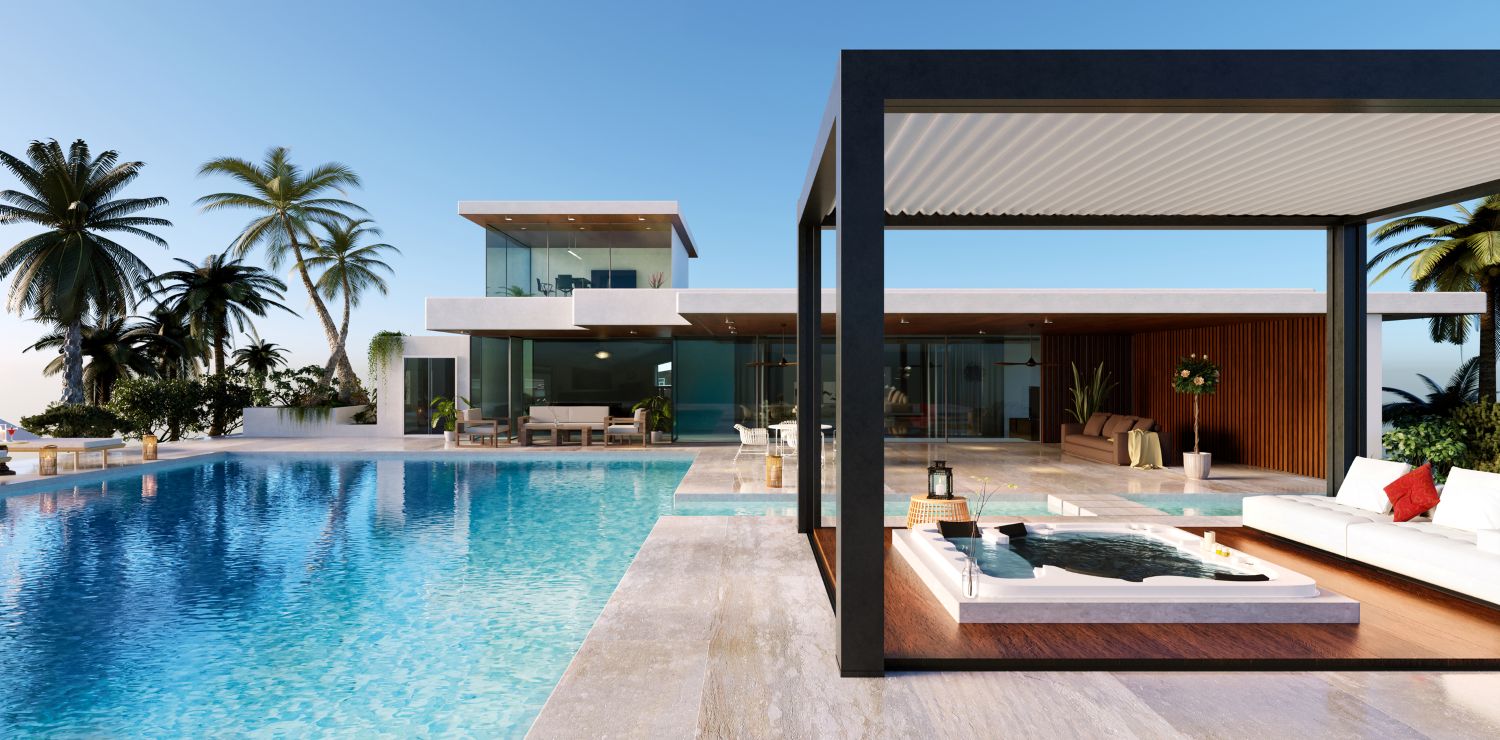
In response to this market evolution, Grupo Ayuso has developed Vértika, a bioclimatic pergola made of high-strength aluminum with a modular structure that facilitates its integration in residential projects as well as in hotels, restaurants, offices, or collective facilities. Its motorized adjustable slats, integrated climate sensors, and hidden water evacuation system allow for real-time adaptation to environmental conditions, improving comfort and promoting a more efficient use of outdoor spaces. “The exterior has become part of the architecture itself,” concludes Zueco. “We no longer design just efficient buildings; we design user experiences. In this context, solutions like bioclimatic pergolas help expand the truly habitable surface of the building, improve its energy performance, and add value both functionally and architecturally.”