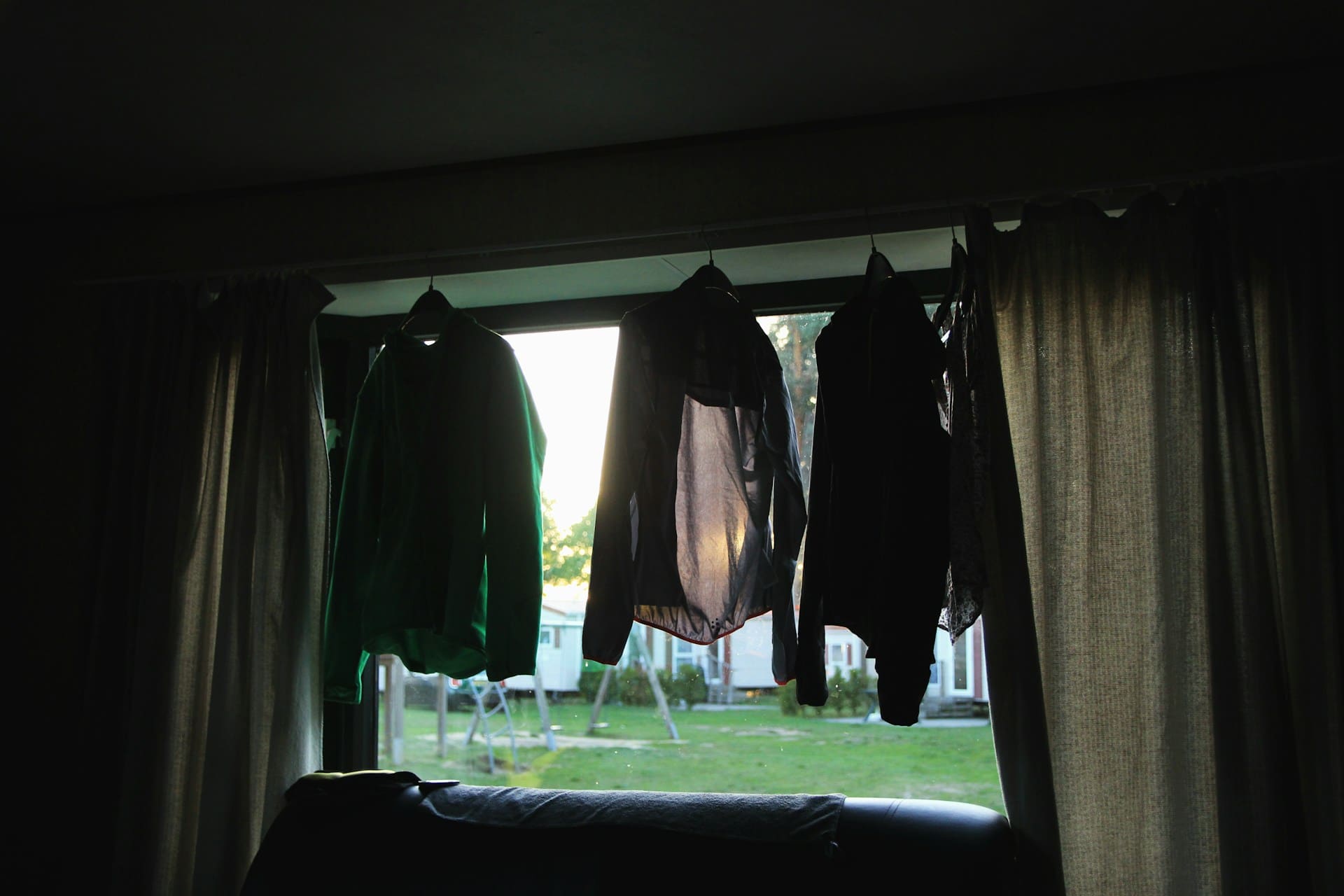
When the cold weather arrives, many homes end up moving the clothesline from the balcony to the living room, hallway, or a room “so it dries faster.” The problem is not hanging clothes inside, but doing so without ventilating. That is the most common domestic mistake: the water is believed to “disappear,” but in reality, it just changes places.
Clothes dry because the water passes from the fabric to the air in the form of vapor. If that vapor stays indoors, the relative humidity rises and the environment becomes “loaded.” And when the house accumulates humidity, it ends up looking for an exit: it condenses where it is easiest, usually on cold surfaces like windows, corners, exterior walls, or ceilings in poorly ventilated areas.
The result doesn’t take long to appear. First, foggy windows and a heavy air sensation. Then, a musty smell, blackened joints, stains on paint or plaster, and in the most persistent cases, mold. The paradox is clear: trying to avoid the cold creates a problem that can end up affecting the home…and comfort as well.
Why mold becomes an unannounced “tenant”
In indoor spaces with high humidity, mold finds the perfect setting: mild temperature, condensation in cold spots, and often, little air circulation. Public health guides warn that humidity and mold in homes are associated with an increase in respiratory symptoms and issues such as asthma or allergies, especially in vulnerable individuals.
It does not mean that drying clothes indoors will make everyone sick. But it does imply that if done daily without measures, it increases the risk of condensation and spore proliferation in an environment where, in addition, we spend many hours.
How to hang clothes indoors without turning the house into a greenhouse
There are simple solutions that reduce the problem without giving up the indoor clothesline:
- Effective ventilation: opening windows for 5-10 minutes creating a draft (from two opposite points) is usually more effective than leaving a crack “all day.”
- Concentrating drying in one room: it’s better to use a room with a door (and window) than spreading moisture throughout the house.
- Separate clothing well: the more air circulates between fabrics, the faster they dry.
- Use extraction: if hanging clothes near the kitchen or bathroom, an extractor fan helps remove vapor.
- Avoid cold spots: do not place the clothesline near frozen exterior walls or windows with frequent condensation.
- Dehumidifier: if the floor is damp or there is poor ventilation, it is often the most direct way to reduce humidity and speed up drying.
Is it a good idea to use a dryer to speed up drying?
In general, it can be a good option if the goal is to prevent laundry humidity from staying inside. A dryer “removes” that moisture (depending on the equipment type, it either expels it outside or condenses it in a container), reducing the risk of condensation in rooms.
Still, it is important to note:
- Pros: speeds up drying, reduces ambient humidity, useful on rainy days or in cold homes, and avoids hanging clothes in high traffic areas.
- Cons: electricity consumption, possible wear or shrinking of certain clothing items, and the need for maintenance (lint filter, cleaning the condenser/exchanger depending on the model).
- Practical advice: if used frequently, it is usually worth choosing efficient models (e.g., with a heat pump), using programs with humidity sensors, and not “over-drying.”
Frequently Asked Questions
How long should I ventilate if I hang clothes indoors?
It is better to have short and intense ventilation (5-10 minutes with a draft) than leaving a crack open for hours without truly renewing the airflow.
Does hanging clothes over radiators help or worsen humidity?
It can dry faster, but the humidity still ends up in the indoor air. If not ventilated, the condensation problem can worsen.
Does a dehumidifier substitute ventilation?
It helps a lot, but the ideal is to combine both: a dehumidifier to lower humidity and occasional ventilation to renew the air.
Referrer: MiMub in Spanish