
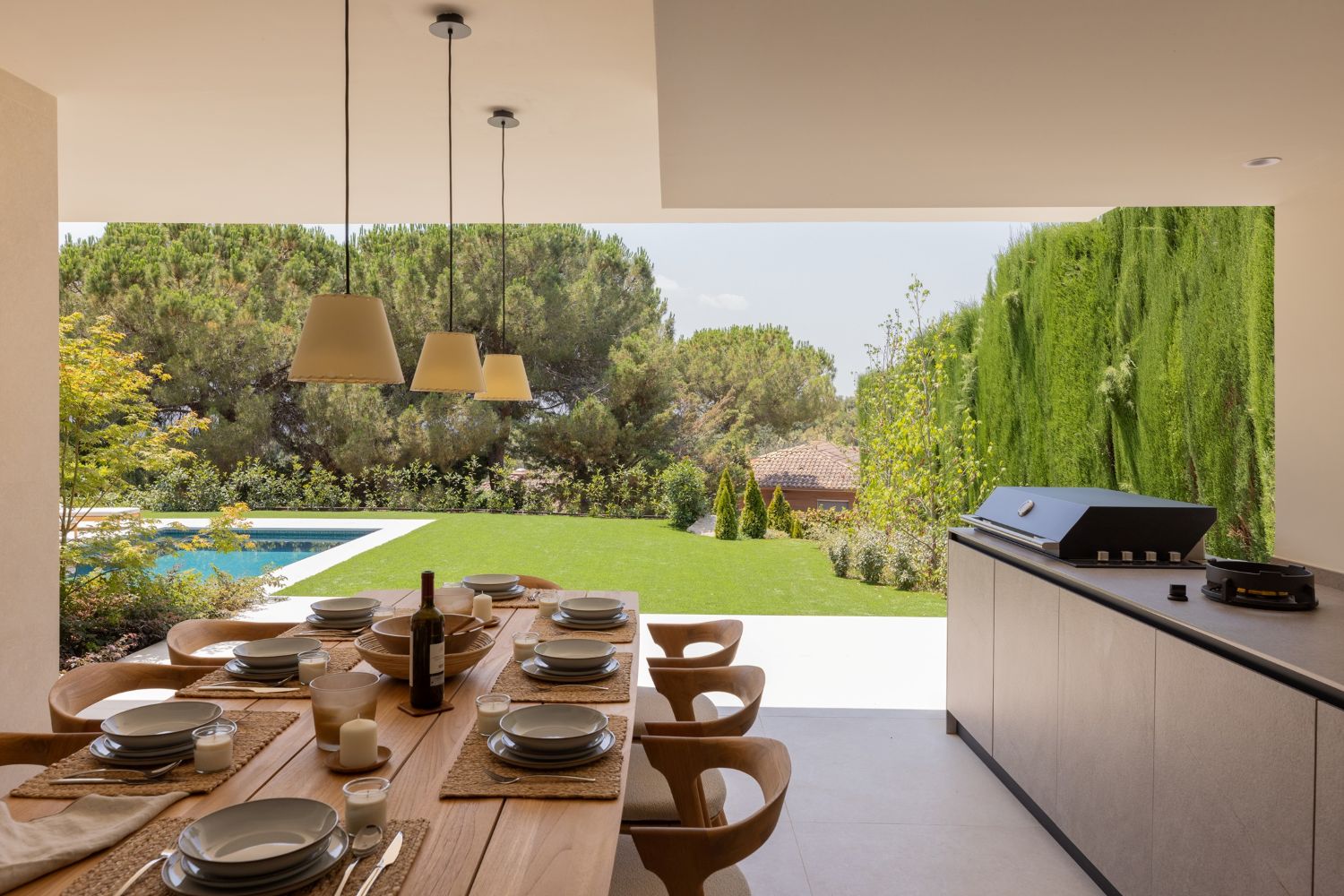

When it comes to cooking outdoors, the most common thing is to think of barbecues with friends and family, something that is usually very common during the summer months. However, in recent years, it is becoming more and more common for families to make better use of the space available in their patios and gardens to install an outdoor kitchen to surprise their guests on sunny days.
In this sense, the Kitchen Furniture Association (KFA) has focused on outdoor kitchens as a trend that allows creating a more flexible, open, and space-conscious home.
From occasional barbecue to planned outdoor kitchen
Transforming a simple barbecue into a real outdoor kitchen requires proper planning. Before selecting the equipment and elements that will be part of the space, it is essential to study aspects such as its location, intended use, the number of people who will use it regularly, the frequency of use, and the connection it will have with the kitchen located inside the home.
The needs vary considerably depending on whether it is a small terrace for occasional gatherings or a garden in a permanent residence, a vacation home, or a space designed to host guests. In each situation, it is necessary to analyze factors such as orientation, sunlight and wind exposure, circulation areas, proximity to other homes, available infrastructure, and smoke evacuation systems, in order to guarantee both comfort and safety.
In this regard, the KFA emphasizes the importance of having the advice of specialized professionals. Proper planning allows for the efficient distribution of the cooking area, the incorporation of work surfaces, the optimization of paths, the integration of storage spaces, and the choice of materials and solutions specifically designed for the outdoors. In this way, a functional, practical, and ready space is achieved to offer a comfortable experience from the very beginning.
Resistant materials for a space designed to last
In an outdoor kitchen, the choice of materials not only responds to aesthetic criteria. Furniture, work surfaces, and cooking elements must be prepared to withstand the sun, moisture, temperature changes, intensive use, and frequent cleaning.
Therefore, it is advisable to choose high-resistance materials, easy to maintain, and suitable for outdoor locations. The surfaces must offer durability, hygiene, and safety, especially when in contact with food and subjected to more demanding conditions than those of an interior kitchen.
Work, storage, and lighting areas
A comfortable outdoor kitchen not only depends on a good cooking area. As in the interior of the home, its functionality improves when the space is organized into areas that facilitate work, reduce travel, and allow enjoyment without constantly going in and out of the house.
- Cooking area. It can include a barbecue, grill, oven, hot plate, or even traditional stoves, always adapted to the available space and ventilation conditions. Its location should be designed for cooking comfortably, controlling smoke, and maintaining an adequate distance from passageways, outdoor dining areas, or nearby homes.
- Water area. Incorporating a sink facilitates food preparation, utensil cleaning, and space maintenance during use. When possible, providing a water inlet and drain avoids excessive dependence on the indoor kitchen and improves the daily experience.
- Preparation area. A good countertop allows for cutting, seasoning, plating, or supporting containers without saturating the cooking area. This surface should be resistant, easy to clean, and sized according to the type of use, from simple meals to gatherings with several guests.
- Storage area. Lower modules, drawers, or protected shelves help store dishes, utensils, kitchen accessories, small complements, and even condiments. Having these items on hand adds order and prevents unnecessary travel.
- Food area. In more complete projects, incorporating an outdoor refrigerator or freezer allows for storing beverages, fresh foods, or pre-prepared dishes without disrupting the dynamics of the space. This is a particularly useful solution in gardens, porches, or frequently used outdoor kitchens.
Lighting should also be considered on two levels. A functional light over the work area improves safety and precision when cooking, while ambient lighting helps create a pleasant atmosphere for dinners, gatherings, or outdoor meetings. Outdoors, it is also advisable to choose solutions prepared to withstand moisture and temperature changes.
Cooking outdoors, enjoying more at home
Beyond the technical aspects, an outdoor kitchen should also complement the aesthetics of the home and the environment. It can have a Mediterranean feel, with light materials, natural fibers, and a visual connection to the landscape; a more rustic style, integrated into gardens or country houses; an industrial aesthetic, with steel, clean lines, and robust surfaces; or a more contemporary and minimalist proposal, designed for urban terraces. The key is for the design to not seem added, but integrated, maintaining coherence with the rest of the home and responding, at the same time, to the demands of the outdoors.
“Good Home Cooking can also be experienced outdoors. We are seeing how the sector is starting to respond to this trend with increasingly complete outdoor solutions, capable of adapting to different housing styles and ways of life. It’s not just about moving the kitchen outside, but about designing spaces prepared for real use, with careful aesthetics and materials suitable for enjoying the outdoors with comfort, quality, and personality,” state from the KFA.