
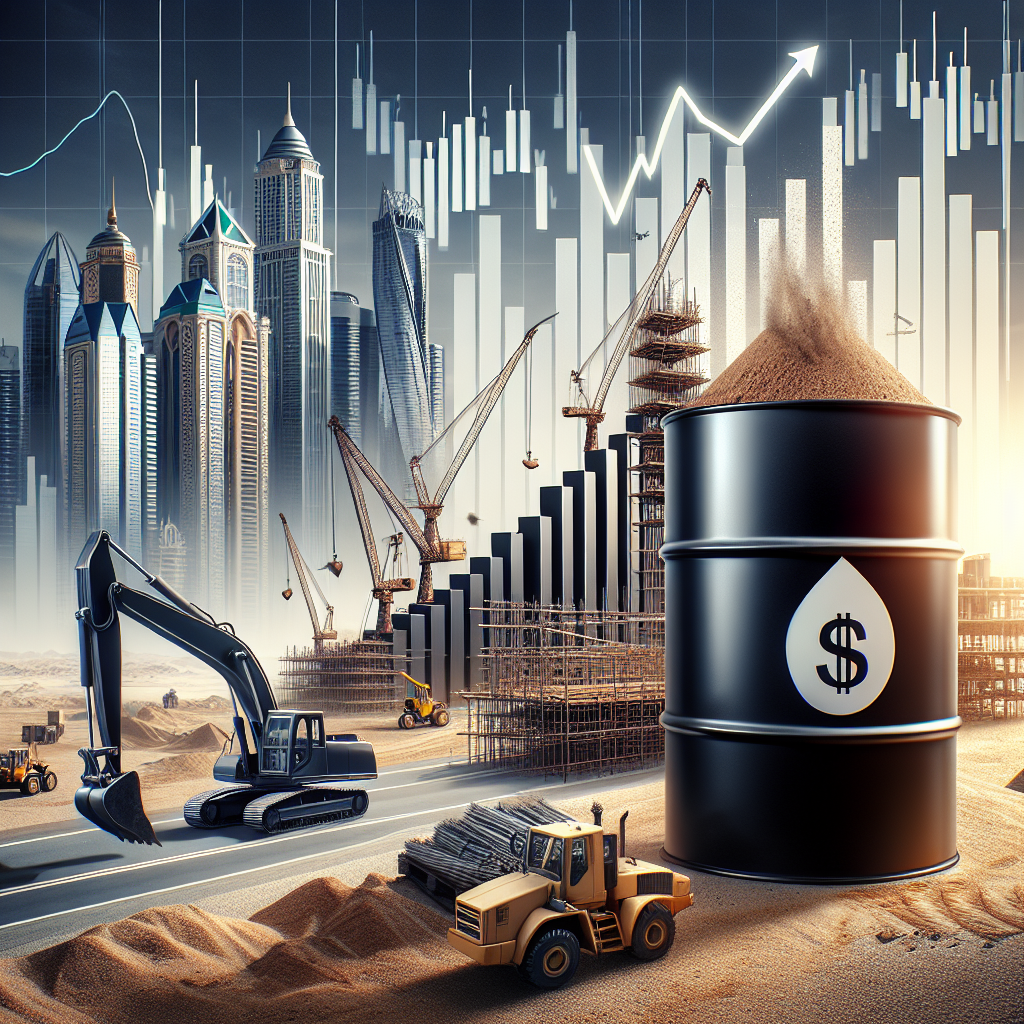
The increase in the cost of energy and raw materials such as steel, aluminum, or cement poses serious threats to fixed-price construction projects and could pave the way for contractual renegotiations. The law firm GTA Villamagna warns that, in this context, price review clauses and indexing mechanisms are becoming essential tools to ensure economic balance in private law construction contracts.
The recent escalation of tension in the Persian Gulf region, specifically in Iran, has once again highlighted the fragility of the energy and raw materials markets. In a globally interdependent environment, any disturbance in this area can quickly reflect on production and transportation costs, impacting particularly the construction sector, which is especially vulnerable to these fluctuations.
The Strait of Hormuz is a critical point in this regard. Any restriction on maritime traffic through this route could trigger energy supply problems and force the redirection of shipments through longer and more costly routes. GTA Villamagna warns that in European economies, which have significant energy dependence, these tensions can amplify inflationary pressures and affect multiple supply chains.
Mercedes Bértolo Martín de Rosales, a partner at GTA Villamagna, points out that the construction industry, which depends directly on the cost of energy and transportation, becomes one of the most affected when disruptions in the markets occur. “The COVID-19 pandemic and the war in Ukraine already showed how these events can lead to a steady increase in the prices of materials,” Bértolo says.
In previous crises, such as those stemming from the pandemic, exceptional measures were promoted, such as Royal Decree-Law 3/2022, which introduced price review mechanisms in public sector contracts under certain circumstances. Bértolo emphasizes that, currently, the increase in fuel costs and other energy products is beginning to reflect dramatically on key materials, which, in turn, affects the budgets of projects.
If the situation in Iran continues, an increase in energy costs and, therefore, in transportation and raw materials costs is foreseeable. This poses a significant uncertainty factor in the economic planning of construction projects. The imbalance between actual costs and previously agreed prices in the contract can compromise the economic balance of significant works, generating risks of lower margins for contractors and prompting developers to review prices or renegotiations.
Bértolo points out that the concepts of price review or indexing become key pieces to try to maintain stability in long-term projects. On the other hand, if contracts do not contemplate mechanisms to adjust prices, parties often resort to contractual modifications. The judicial application of the rebus sic stantibus clause, although sometimes interesting, frequently does not offer a viable solution, as courts tend to interpret that market fluctuations are part of business risk.
To mitigate the impact of these fluctuations, companies are increasing their attention to price determination and the inclusion of clauses that regulate extraordinary increases. The trend is towards creating more precise contracts and more effective price review mechanisms that help reduce the parties’ exposure to market volatility. In this sense, Bértolo concludes that these tools are fundamental to preserve the economic balance of the contracts and ensure the viability of long-term projects.