
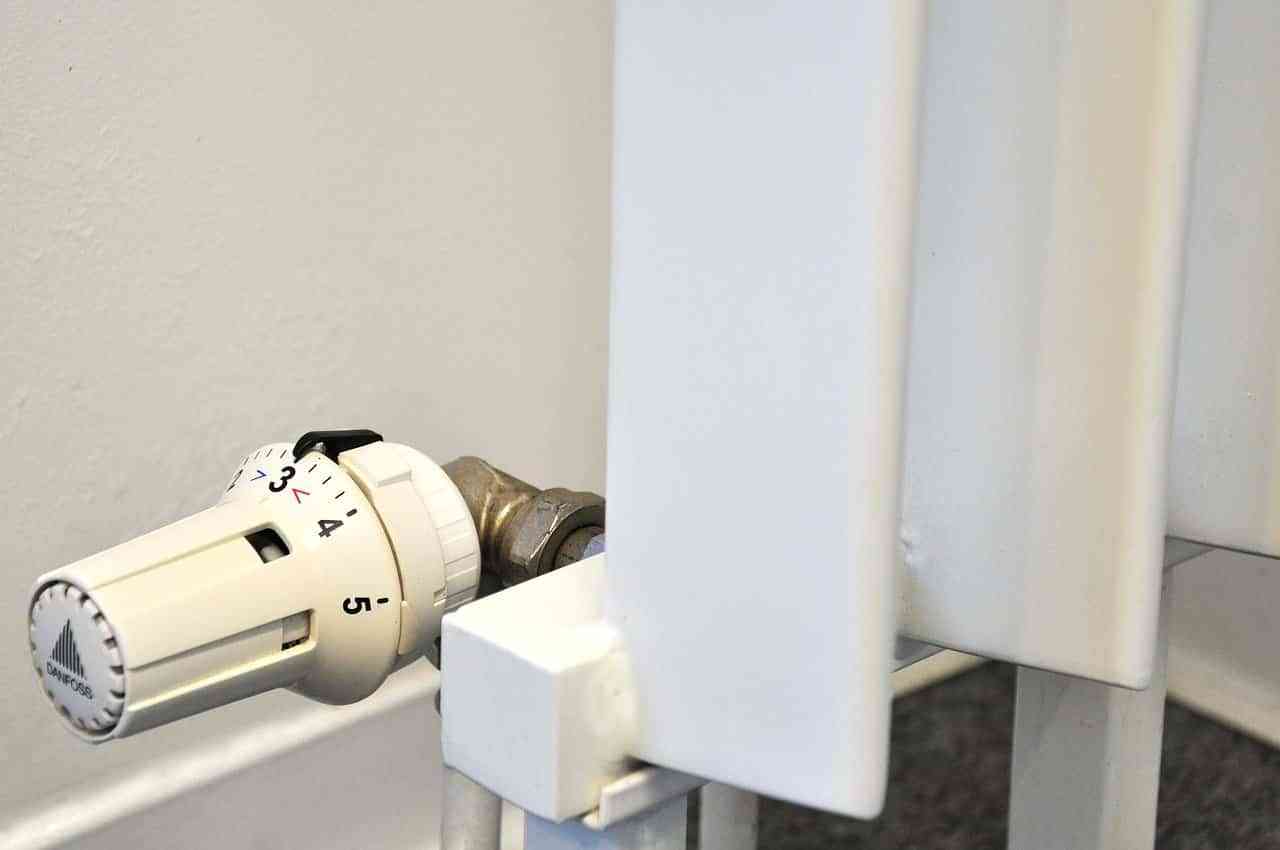

In many Spanish homes, the winter brings an automatic gesture that repeats every year: arriving cold, going straight to the thermostat, and raising it to 25 °C in the hope that the living room will heat up “faster”. The sense of urgency is understandable. What is not so obvious is that, in most households, that gesture does not accelerate the heating… it actually increases consumption.
The explanation is simple and has a lot to do with how a heating system really works and with a factor that is rarely discussed outside the world of architecture: the house is not just air. It consists of walls, floors, ceilings, furniture, and fabrics. And all of that takes time to heat up.
Raising to 25 °C is not like stepping on the gas
The thermostat, under normal conditions, acts as a temperature “target”. If the house is below the set temperature, the system works to provide heat. When the set temperature is reached, it reduces or stops the heat supply.
Here is the misunderstanding: setting it to 25 °C does not usually make “more heat come out” in that initial moment, but rather the system will take longer to stop because the goal is much further away. In other words: if the house is at 17 °C, the system will have to provide energy to reach 20–21 °C… and, if set to 25 °C, it will continue providing energy until it gets close to that value, even though the comfort has already been reached earlier.
It is common for the user to feel the house comfortable when it reaches around 20–21 °C and then lower the heating or even ventilate because they “overdid it”. This cycle (raising it a lot, overshooting, correcting) is one of the fastest ways to turn a domestic system into a thermal roller coaster.
The higher the set temperature, the more heat is lost along the way
There is a second, more invisible effect that is well understood in architecture: the greater the difference between inside and outside, the greater the losses. If it is 5 °C outside and you want to reach 25 °C inside, the house “pushes” more heat out through windows, closures, blinds, cracks, and thermal bridges. It’s not just that it heats up more: it also escapes more.
Therefore, even in homes with a good boiler, a high set temperature can become an energy pit, especially when the building has weak points (old carpentry, poor insulation, air leaks).
Comfort temperature doesn’t have to be tropical
The good news is that comfort doesn’t require exaggerations. In Spain, public recommendations for homes usually revolve around 20–21 °C to be at home with appropriate clothing and basic measures such as lowering blinds at night. This range is repeated in practical guides, along with guidelines such as reducing the temperature during sleep or when the house is empty, always with common sense and considering each family’s situation.
Additionally, in the energy debate of recent years, an idea has become popular that, while not a universal rule, helps to understand the impact of each degree: it has been estimated that adjusting the set temperature by one degree can result in around a 7% savings in heating or cooling consumption, depending on the context. It’s not magic: it’s physics and habits.
The decoration factor that changes comfort: not everything is the boiler
In a home decoration setting, there is a key point that is often forgotten: heating warms up, yes, but how the house “feels” warm or cold is influenced by more than just the air. The air temperature is only a part of it. Radiant cold surfaces, humidity, drafts, and even how the space is furnished influence that perception.
Some seemingly aesthetic household decisions have a practical effect:
- Textiles that retain heat: rugs, curtains with good weight and layers (sheer + heavy curtains) help reduce losses through windows and cold floors.
- Smart distribution: if a radiator is partially blocked by a sofa, a sideboard, or long curtains, the hot air does not circulate well. It warms up “the corner” and not the room.
- Beds and bedrooms: nighttime comfort doesn’t always require the same temperature as the living room. A good duvet, an extra blanket, and appropriate bedding can allow you to lower the set temperature without feeling cold.
What does work to heat up faster (without raising to 25 °C)
1) Programming: the real “heat on arrival”
If you arrive home at a similar time every day, the most efficient thing is to anticipate turning it on. A programmable (or smart) thermostat allows the home to reach 20–21 °C just when it’s occupied, without thermal shocks.
2) Heating by zones, not by pride
It’s not necessary for the whole house to be the same temperature. Closing doors and prioritizing rooms in use is a simple measure. If there are thermostatic valves, adjusting each radiator prevents heating empty rooms.
3) Close the house at night: blinds, curtains, and small leaks
Closing blinds, drawing curtains, and sealing cracks with weatherstrips reduces losses. It’s one of those inexpensive measures that make a big difference in terms of comfort.
4) Ventilate well, but little
Ventilation is necessary, but doing it for long periods with the heating on is a direct drain. The most reasonable thing is usually a brief and intense ventilation, and then recover the temperature without “overdoing it” on the set temperature.
5) Basic household maintenance: radiators and balance
In radiator systems, trapped air reduces efficiency. Purging when needed and checking that heat is distributed evenly prevents the user from compensating for a mechanical issue by “raising the temperature.”
6) For heat pumps or underfloor heating, patience and stability
There are systems that work better with more stable temperatures and moderate settings, especially due to their inertia. In these cases, sudden changes not only don’t help: they sometimes worsen comfort.
The summary in one sentence
If the house takes time to heat up, it is rarely fixed by setting it to 25 °C. It is fixed by combining a sensible set temperature, control (programming), fewer losses (blinds, weatherstrips, textiles), and a layout that allows the heat to breathe. It’s a less spectacular recipe, but much more effective.
Frequently Asked Questions
Why doesn’t my house heat up faster even if I set the heating to 25 °C?
Because the thermostat sets a target, it usually does not “provide more power” by setting a higher temperature. It is normal for the system to run for longer, not to accelerate the initial heating.
What is the recommended temperature for being at home in winter without overspending?
In practical recommendations for homes, a range of 20–21 °C is usually sufficient for comfort with appropriate clothing, adjusting downward at night or when the house is empty depending on each case.
Can you really feel the difference by lowering the heating by just 1 degree?
In terms of consumption, it can be noticeable because each degree changes the interior-exterior difference and heat losses. It has been estimated in public discussions that one degree can represent around a 7% savings in certain conditions.
Which decoration changes help the most in maintaining warmth?
Curtains with good fabric (and closed properly at night), rugs in cold areas, avoiding blocking radiators, and reducing drafts with weatherstrips usually provide very visible comfort improvements without construction work.