
The transformation of the home into a sanctuary dedicated to health and personal balance has become a priority in interior design. Beyond the visual aesthetics of the spaces, residential design seeks to create sensory experiences that promote relaxation, stress reduction, and comprehensive body care. In this context, installing private spa equipment in single-family homes or spacious apartments has gained ground as an affordable alternative to enjoy heat therapies without leaving home.
Integrating an indoor Finnish sauna into the layout of the home, whether in the main bathroom, a spare room, or gym areas, requires proper planning of both the space volume and construction materials. Solutions developed by specialized firms like Avilsa allow for adapting noble wood cabins to the actual dimensions of the property, combining tradition and efficient heating technology. According to Olga, from Avilsa, one of the experts consulted for this content, the crucial aspect before undertaking any project lies in verifying that the cabin has a rigorous perimeter thermal insulation and correct air circulation, ensuring that the dry heat is distributed homogeneously without oversizing the electrical consumption or overloading the structure of the room.
To maximize the biological benefits of these facilities and ensure functional integration in the home, it is necessary to understand how dry heat acts on the body, what technical requirements its installation demands, and how the ambiance influences the well-being experience, paying special attention to decoration tips and ideas to harmoniously furnish the bathroom.
Dry heat as a detoxification and relaxation resource
The practice of the traditional Finnish sauna is based on exposure to high temperatures (usually ranging from 80°C to 100°C) with very low relative humidity levels, typically below 20%. This combination of dry heat triggers an immediate vasodilatory response that increases peripheral blood flow and accelerates heart rate in a controlled manner, simulating the effects of moderate-intensity exercise.
Main effects on the body
- Stimulation of sweating: Profuse sweating promotes the elimination of toxins accumulated in the skin, cleansing pores and improving skin elasticity.
- Muscular and joint relaxation: The increase in muscle temperature relieves accumulated tension in the cervical and lumbar areas, accelerating recovery after physical activity or long workdays.
- Stress reduction and improved sleep: The thermal shock stimulates the release of endorphins, promoting a natural sedative state that facilitates deep nighttime rest.
Understanding these physiological mechanisms allows for adapting the duration and frequency of sessions to the specific needs of each user, turning the cabin into a didactic resource for preventive health within the daily routine.
Technical requirements: ventilation, electrical power, and drainage
Planning an indoor sauna requires attention to certain domestic engineering criteria to ensure safe and efficient operation over time.
- Electrical supply: Requires single-phase (230V) or three-phase (400V) connection depending on the number of kilowatts required by the stove.
- Passive ventilation system: Must have a lower fresh air intake located next to the heater and an outlet grille located on the upper part of the opposite wall.
- Perimeter insulation: Panels must incorporate high-density rock wool protected by a reflective aluminum barrier.
- Floor covering: It is advisable to opt for a non-slip surface, made of ceramic or waterproof material, easy to disinfect.
The choice of a volcanic rock stove or heater should be directly proportional to the volume in cubic meters of the cabin. Insufficient power will force the equipment to work continuously at maximum performance, increasing energy consumption and reducing the life span of the resistances.
Olga, an expert consulted from Avilsa, emphasizes the importance of designing an adequate air renewal system. The specialist explains that a fresh air inlet grille under the heater and a diagonal outlet on the opposite wall allow the hot air to circulate naturally, avoiding the accumulation of stale air and maintaining optimal oxygen levels inside the chamber during the session.
Aesthetic integration and chromatic lighting in the space
The success of a home spa installation depends not only on its technical performance but also on its ability to harmoniously integrate into the decorative language of the home.
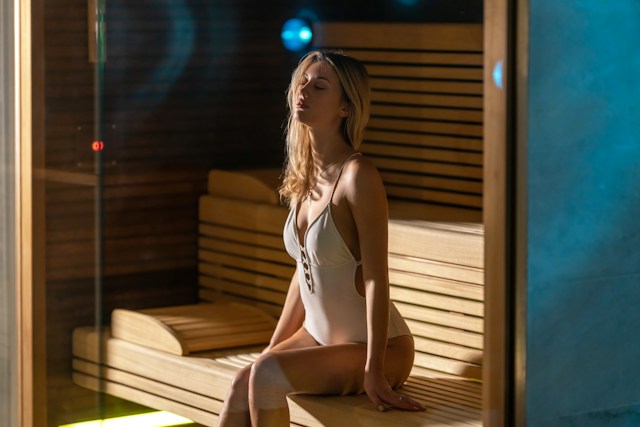
Current trends in cabin design opt to replace solid wood panels with panoramic front panels made of tempered safety glass. This solution provides visual lightness, eliminates claustrophobic feelings, and allows natural light to filter into the module.
Likewise, the incorporation of indirect lighting systems using adjustable LED strips and chromotherapy allows for alternating warm or cool tones depending on the session’s objective (relaxation or energetic activation). Combining light wood panels such as fir, lime, or cedar with neutral-textured ceramic coatings on adjacent walls helps to delimit the water area, transforming a conventional bathroom into a personal sanctuary of comfort.
Tips for conscious use and preventive maintenance
To enjoy a safe experience and prolong the preservation of the wood, it is advisable to follow some basic maintenance guidelines:
- Use of towels on benches: Avoid direct contact of sweaty skin with the wood slats to prevent the appearance of moisture stains and preserve the material’s hygiene.
- Drying after use: At the end of the session, leave the cabin door slightly ajar with the ventilation system active to evaporate any residual ambient moisture.
- Cleaning with neutral products: Periodically disinfect the benches and walls with specific non-abrasive cleaners for noble woods, avoiding the use of aggressive chemical detergents or high-pressure water.